

This blog focuses on presenting complex DevOps projects as simple and approachable via plain language and lots of pictures. You can do it!
These articles are supported by readers, please consider subscribing to support me writing more of these articles <3 :)
Hey all!
I’ve been building a Go client that runs on Windows and Linux hosts.
I’m not able to talk yet about what the client actually does (that’s coming when our lawyers clear it!). I’m patenting a thing. It’s awesome.
Go generates a binary executable (exe) that can run on windows. So in my lab I wrote a tool, generated the binary, and ran the binary (as a windows service), and it worked great. However, when we shipped to our fleet it got blocked almost right away (laugh/cry) by our security tools (EDR) and by windows itself.
It turns out an unsigned exe isn’t very trustworthy in windows eyes. Our security team said they could (manually) permit the hash of every binary so the EDR knows its really ours. But I’m iterating like, 20 times a day, so any type of manual permitting, and waiting for the entire fleet of EDRs to catch up, just isn’t good enough.
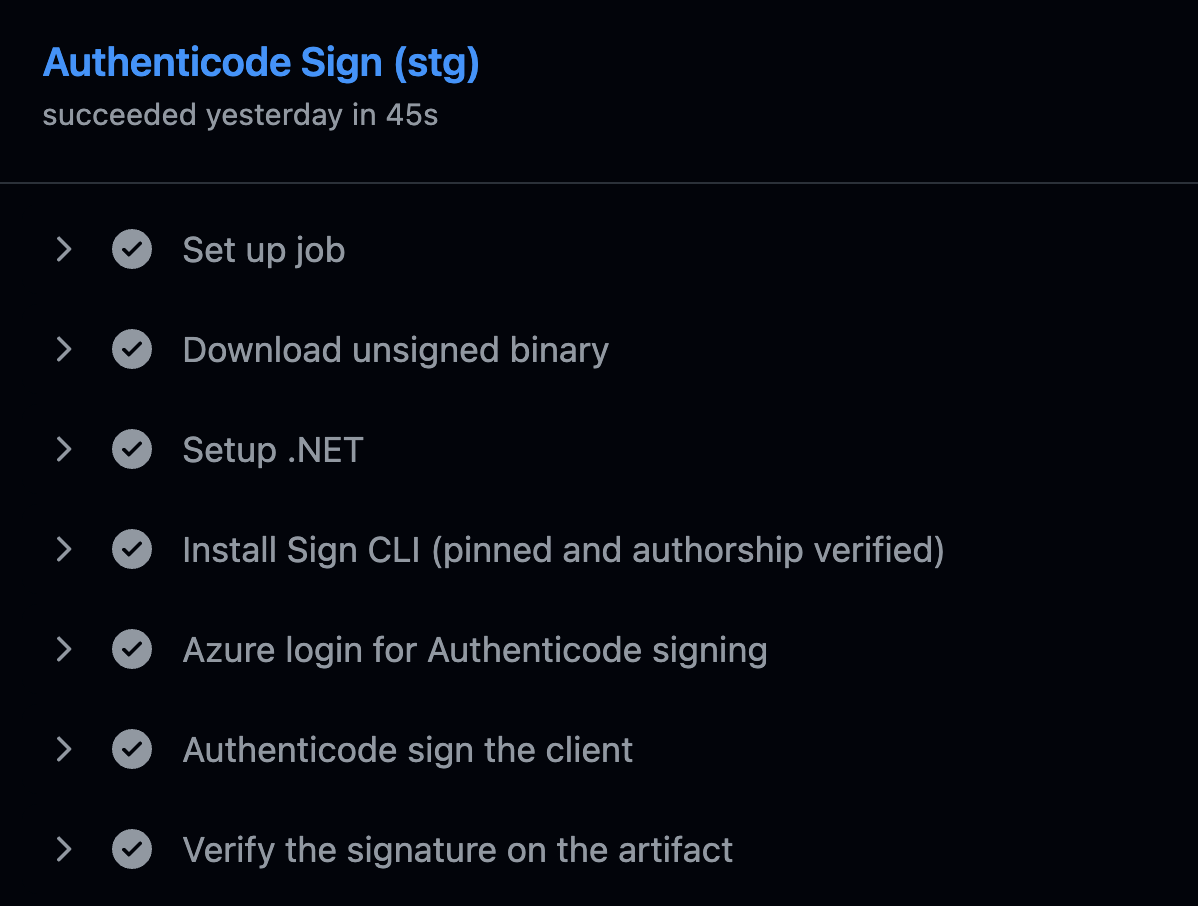
We asked if we could sign the binaries, and they said they could permit-list the certificate, and it’d work for all versions, forever. BOOM that’s the winner. Lets do it.
Now, I’m a linux kid. I don’t usually mess with Windows (icky), so signing for me starts with openssl and a series of awful command line flags. You’d have a signing cert and you’d use your private key to generate a separate file that could only be generated with the original file + the secret key from the signing certificate. It’s not very easy to use but it’s what I’m used to!
