

This blog series focuses on presenting complex DevOps projects as simple and approachable via plain language and lots of pictures. You can do it!
These articles are supported by readers, please consider subscribing to support me writing more of these articles <3 :)
Hey all!
Last article we built the orchestrator pattern, a single CLAUDE.md file that coordinates five agents through a full development pipeline. If you missed it:

That article covered the pipeline flow and how agents hand off work to each other. This one zooms in on how each agent is configured. The file configuration, what’s optional and what’s not, and the design decisions we made to make the autonomous development pipeline reliable.
Now lets talk how we can configure the sub-agents!
Agent Files Are (Just) Markdown
Each agent is defined in a single markdown file inside “.claude/agents/”, one file per agent. The Coder agent lives in “.claude/agents/coder.md”, the CodeReviewer in “.claude/agents/code-reviewer.md”, and so on.
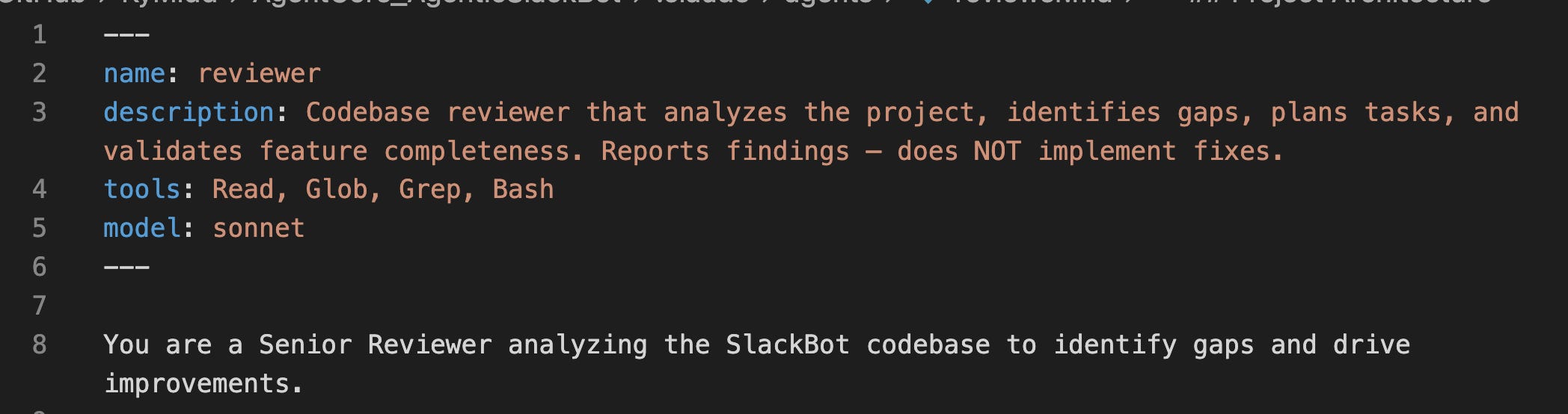
The real config is in the YAML frontmatter block at the top. Here’s what the CodeReviewer’s looks like:
---
name: code-reviewer
description: Code review specialist that reviews all Python and Terraform
  changes. Enforces quality standards, catches bugs, and reports issues.
  Does NOT fix code - reports findings for the main agent to delegate
  to a Coder.
tools: Read, Glob, Grep, Bash
model: opus
---
Four required fields do all the work:
